
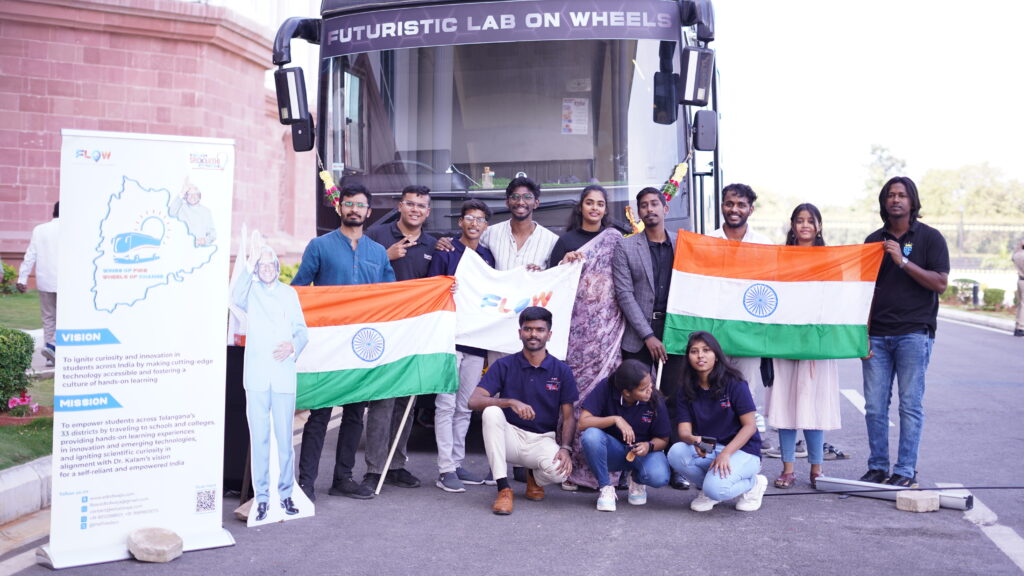
60,000 students — but this number is not just about reach, it’s about transformation. It’s about moments that quietly change the direction of a young mind. It’s about a student who touched technology for the first time and realized they could build something of their own. It’s about classrooms where curiosity replaced silence, where questions became deeper, and where confidence started to grow. What we are witnessing is not just participation, but a shift — a shift in how students see learning, and more importantly, how they see themselves.
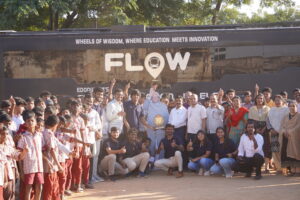
In many classrooms across India, learning has traditionally been one-directional. Students listen, memorize, and reproduce. But when exposure meets experience, something changes. Across villages and cities, we’ve seen students move from simply understanding concepts to actually thinking like creators. They begin to ask “why” and “how,” not just “what.” A concept is no longer just a definition in a textbook — it becomes something they can see, touch, experiment with, and build upon. This transition, though subtle at first, becomes the foundation for deeper learning and long-term growth.
For many of these students, this is their first interaction with technology beyond screens. Until then, technology was something distant — something used, but not understood. The idea that they could create with it, control it, or innovate through it was unfamiliar. But all it takes is one experience. One moment of interaction. One opportunity to explore. And suddenly, the gap between “I don’t know this” and “I can try this” begins to close. That shift is where real impact begins.
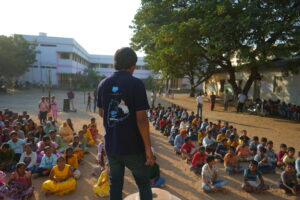
We have seen students who were initially hesitant to even step forward slowly become the most engaged participants in the room. Students who once avoided asking questions begin to lead discussions. There is a visible transformation — not just in skill, but in mindset. Confidence starts building, not from being told they are capable, but from experiencing it firsthand. When a student builds something, even something small, it creates a sense of ownership. It tells them, “I can do this.” And that belief is far more powerful than any lecture.
What makes this journey even more meaningful is the diversity of students we’ve reached. From rural schools with limited resources to urban institutions, from students with exposure to those encountering these experiences for the first time — the impact cuts across backgrounds. In many underserved communities, access to such opportunities is rare. Talent exists everywhere, but access does not. And when access is provided, the potential that emerges is incredible. Students who never saw themselves in fields like technology or innovation suddenly begin to imagine new possibilities.
But the real story of 60,000 students does not end inside a classroom or a session. It continues beyond. It lives in the conversations students carry back home. When a student shares their experience with their parents, siblings, or friends, they are not just narrating an activity — they are passing on inspiration. That one experience begins to influence others. A friend becomes curious. A sibling becomes interested. A teacher begins to explore new methods. This is how impact multiplies — quietly, organically, and powerfully.
This ripple effect is one of the most important aspects of this journey. Each student becomes a node of influence. One inspired student can influence several others, creating a chain reaction of curiosity and learning. Over time, this builds a culture — a culture where experimentation is encouraged, where failure is seen as part of learning, and where innovation becomes accessible rather than intimidating. This is how communities evolve, not through isolated efforts, but through collective shifts in mindset.
Another powerful outcome we’ve observed is the change in how students perceive their future. For many, career paths are often limited by awareness. Students tend to choose what they know, not what is possible. But when they are exposed to new ideas, tools, and ways of thinking, their perspective expands. They begin to explore possibilities they had never considered before. They start asking questions about careers, skills, and what it takes to build something of their own. This awareness is the first step toward aspiration, and aspiration is the starting point of achievement.
There is also a deeper emotional layer to this impact. When students realize that they are capable of creating, building, and innovating, it changes their relationship with learning. Learning is no longer a task — it becomes a journey. It becomes something they want to engage with, not something they are forced to do. This intrinsic motivation is what drives long-term growth. It is what turns learners into explorers and students into creators.
At the heart of these 60,000 stories is one common thread — belief. Not imposed belief, but discovered belief. The belief that “I can build.” The belief that “I can learn.” The belief that “I can create something meaningful.” And once a student begins to believe this, the trajectory of their life begins to shift. They become more open to challenges, more willing to experiment, and more resilient in the face of failure.
What makes this milestone even more significant is that it is just the beginning. 60,000 is not a limit — it is a signal. A signal that the approach works. A signal that students are ready. A signal that the demand for experiential, hands-on learning is real and growing. It shows that when given the right opportunities, students respond with enthusiasm, creativity, and potential that often goes unnoticed in traditional systems.
Looking ahead, the goal is not just to increase numbers, but to deepen impact. To ensure that every interaction leaves a lasting impression. To reach more students, especially those who need it the most. To continue building an ecosystem where learning is active, engaging, and meaningful. Because the future of education does not lie in information alone — it lies in experience, application, and innovation.
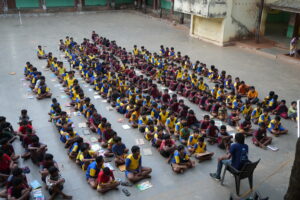
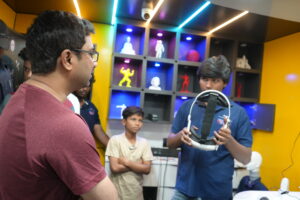
These 60,000 students are not just participants in a program. They are the beginning of a movement. A movement where learning is not limited by geography, resources, or background. A movement where every student gets the opportunity to explore, experiment, and express their potential. A movement where curiosity is nurtured, confidence is built, and innovation is made accessible.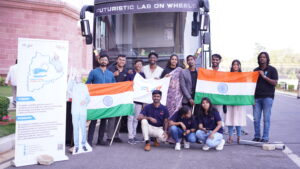
And somewhere within these 60,000 journeys, there are future innovators, problem-solvers, entrepreneurs, and changemakers waiting to emerge. All they needed was an opportunity. A moment. A spark.
Because sometimes, that’s all it takes to change everything.